
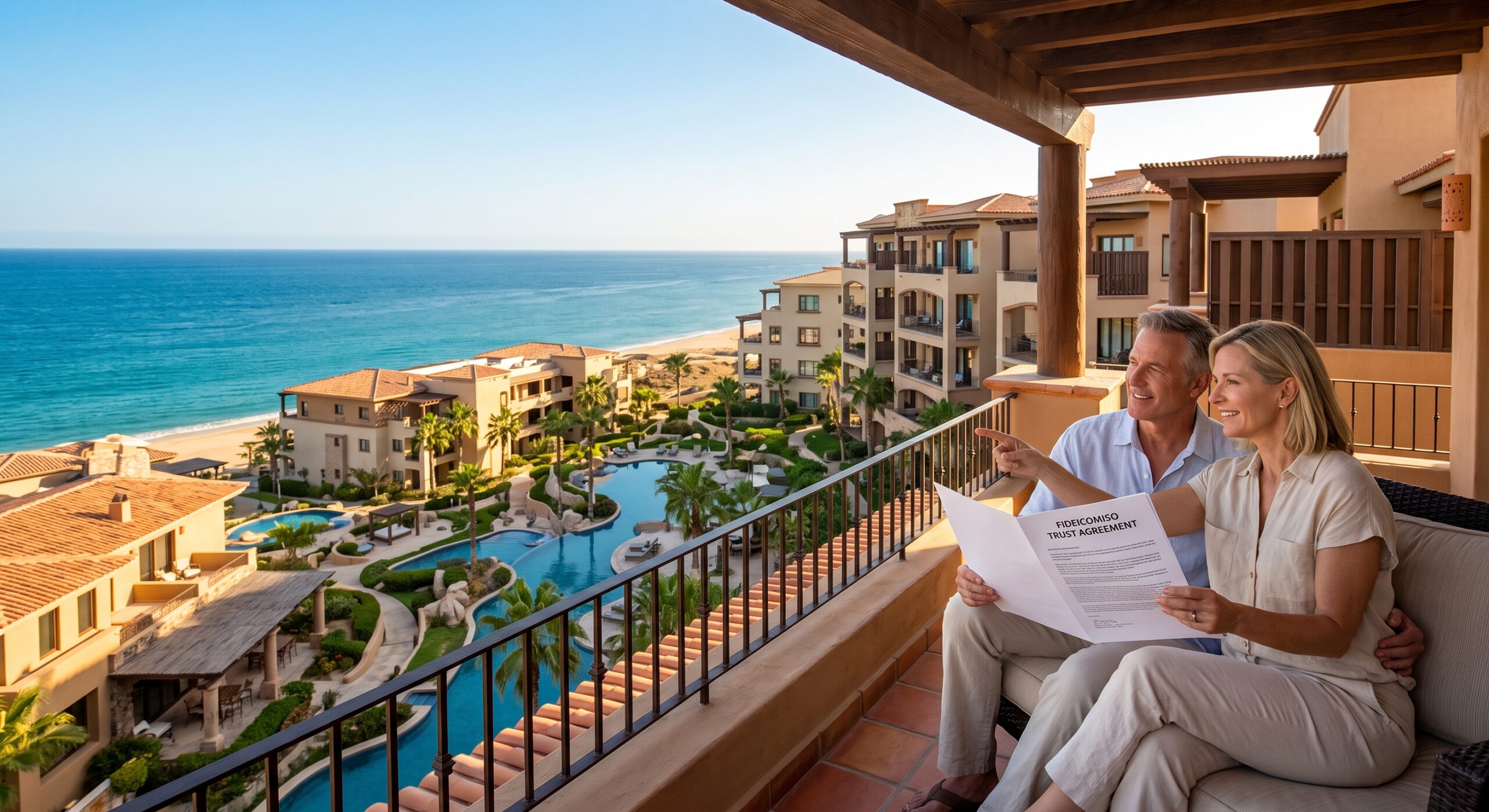
Buying Property in Mexico as an American
Quick Answer
This guide organizes the key property, ownership, budget and due-diligence questions buyers should evaluate before making a decision in La Paz, Baja California Sur. Explore La Paz real estate.
Article Menu — Explore This Guide
Can Americans Buy Property in Mexico? A U.S. Buyer’s Guide
Yes. U.S. citizens can buy real estate in Mexico. The ownership structure, however, depends partly on where the property is located.
In coastal markets such as Los Cabos, Baja California Sur, foreign buyers of residential property commonly hold their rights through a Mexican bank trust known as a fideicomiso because the property is within Mexico’s Restricted Zone.
Key Takeaways for U.S. Buyers
- Americans can buy houses, condos, vacation homes and investment property in Mexico.
- Los Cabos is within Mexico’s Restricted Zone.
- A fideicomiso is commonly used by foreign buyers purchasing residential property in coastal Los Cabos.
- The Mexican bank acts as trustee and the foreign buyer is the beneficiary.
- Closing costs are separate from the purchase price.
- Due diligence should cover title, taxes, condominium obligations and other relevant documentation.
- Buying property and obtaining Mexican residency are separate matters.
Buying Property in Mexico as an American
Americans can acquire homes, condos, vacation properties and investment real estate in Mexico.
The process differs from a typical U.S. real estate transaction. Before making an offer, buyers should understand how the property rights will be held, what documentation should be reviewed, how closing works and what costs may apply.
What Is Mexico’s Restricted Zone?
Mexico’s Restricted Zone includes land within 50 kilometers of the coastline and 100 kilometers of international borders.
Outside this zone, foreign buyers can generally acquire real estate directly, subject to applicable requirements.
Within the Restricted Zone, foreign individuals purchasing residential property commonly hold their rights through a Mexican bank trust, or fideicomiso.
This makes the Restricted Zone particularly relevant to U.S. buyers considering Cabo San Lucas, San José del Cabo, La Paz, Puerto Vallarta, Cancún, Playa del Carmen and other coastal destinations.
What Is a Fideicomiso?
A fideicomiso is a Mexican bank trust commonly used by foreign buyers to hold rights to residential real estate within the Restricted Zone.
A Mexican bank serves as trustee and holds legal title, while the foreign buyer is named as beneficiary.
As beneficiary, the buyer can use and enjoy the property and can generally sell, transfer or pass on the beneficial rights, subject to the trust terms and applicable Mexican law.
A fideicomiso does not mean the buyer is renting the property from the bank. The bank acts as trustee rather than occupying or using the property for its own benefit.
Restricted Zone fideicomisos may be authorized for terms of up to 50 years and may be extended in accordance with Mexican law.
Buying Property in Los Cabos as an American
Los Cabos is located along the coast of Baja California Sur and is therefore within Mexico’s Restricted Zone.
An American purchasing residential property in Cabo San Lucas, San José del Cabo or another coastal community in Los Cabos will commonly use a fideicomiso.
In markets with significant international real estate activity, the transaction is typically coordinated among the buyer, seller, closing professionals, Mexican Notario Público and trustee bank.
How Does the Buying Process Work?
Every transaction is different, but the process generally begins by selecting a property and negotiating the price and purchase terms.
A purchase agreement or promise to purchase may address:
- Purchase price
- Deposit or earnest money
- Payment schedule
- Closing date
- Property condition
- Furniture or equipment included
- Due-diligence period
- Inspection conditions
- Default provisions
- Closing requirements
U.S. buyers should understand these provisions before signing rather than assume the transaction will follow U.S. procedures.
Due Diligence Before Closing
Due diligence is an essential part of buying real estate in Mexico.
Depending on the transaction, buyers may need to review:
- Title history
- Ownership documents
- Liens or encumbrances
- Property taxes
- Condominium obligations
- HOA fees
- Outstanding assessments
- Reserves
- Community regulations
- Rental restrictions
- Pet policies
- Parking rights
- Common-area rules
- Property-management policies
What Does a Mexican Notario Público Do?
A Mexican Notario Público has a substantially different role from a U.S. notary public.
A Notario Público is a highly regulated legal professional authorized by the government to formalize certain legal transactions, including real estate transfers.
The Notario participates in preparing and formalizing deed or trust documents, verifying elements of the transaction and coordinating applicable registration and tax requirements.
Buyers may also retain independent legal or closing representation.
How Does Escrow Work?
Escrow is frequently used in international real estate transactions in Mexico, particularly in markets with significant numbers of U.S. and Canadian buyers.
When escrow is used, funds can be held by an independent escrow provider according to the transaction terms instead of being sent directly to the seller before contractual conditions have been met.
Escrow instructions should clearly establish the conditions required for funds to be released.
Buyers should independently verify the escrow company, wiring instructions and transaction procedures before sending significant funds.
What Closing Costs Should U.S. Buyers Expect?
Closing costs are separate from the negotiated purchase price and vary according to the property, location and ownership structure.
Potential expenses may include:
- Acquisition taxes
- Notario fees
- Public Registry fees
- Certificates
- Government documentation
- Appraisal costs
- Fideicomiso establishment expenses
- Trustee-bank fees
- Foreign-investment permits
- Legal or closing services
Buyers should obtain a written closing-cost estimate before committing to a purchase.
What Does It Cost to Own Property in Mexico?
Ongoing ownership expenses may include:
- Local property tax, or predial
- Annual fideicomiso trustee fees
- HOA or condominium fees
- Insurance
- Electricity, water and internet
- Landscaping and pool service
- Preventive maintenance
- Property management
These expenses should be considered when estimating the total cost of ownership.
Can Americans Finance Property in Mexico?
Financing options can be available to foreign buyers, although they differ from conventional U.S. mortgages.
Depending on the transaction, buyers may encounter:
- Mexican bank financing
- Cross-border mortgage programs
- Developer financing
- Seller financing
- Private financing
- Cash purchases
Financing should ideally be explored before signing a purchase agreement.
Can Americans Rent Out Property in Mexico?
Many U.S. owners use Mexican real estate as a second home while considering seasonal or vacation rentals when they are away.
Whether a particular property may be rented can depend on local regulations, tax obligations, condominium rules, HOA restrictions and the ownership structure.
Buyers planning short-term rentals should investigate these requirements before purchasing rather than assume every community allows vacation rentals.
Condo vs. House in Mexico
Condos can offer convenient shared maintenance and amenities, while single-family homes may provide greater privacy and outdoor space but require more individual maintenance.
In Los Cabos, buyers can encounter options ranging from condos near downtown areas and marinas to hillside residences, golf-community homes and properties surrounded by ocean, desert or mountain landscapes.
Buying Near the Beach
Being described as “near the beach” does not guarantee the same experience from one property to another.
Buyers should consider:
- Actual ocean visibility
- Walking distance
- Beach access
- Swimmability
- Elevation
- Road access
- Nearby construction
- Weather exposure
- HOA restrictions
An existing ocean view should not automatically be assumed to be permanently protected.
Buying New Construction in Mexico
Purchasing a property under construction requires additional evaluation.
Buyers should understand:
- Construction progress
- Estimated delivery
- Payment schedules
- Developer obligations
- Property specifications
- Included finishes
- Condominium documentation
- Utility availability
- Closing requirements
Marketing materials can illustrate the finished project, but signed contractual documents establish the parties’ rights and obligations.
Buying a Resale Property
A resale allows buyers to inspect the actual property, evaluate the existing view, understand the established community and review current HOA operations.
Furniture, appliances and improvements may also be included depending on the negotiation.
Buyers should still verify the property’s legal documentation and outstanding obligations.
Buying Property in Mexico for Retirement
For Americans considering seasonal or full-time retirement in Mexico, long-term usability deserves careful consideration.
Access to hospitals, grocery stores, airports and services—as well as walkability, elevators, stairs, security, maintenance requirements, amenities and monthly ownership costs—can be as important as the property’s size or design.
Frequently Asked Questions
Can an American buy a house in Cabo San Lucas?
Yes. Cabo San Lucas is within Mexico’s Restricted Zone, so a foreign individual purchasing residential property there commonly uses a fideicomiso.
Can Americans buy condos in San José del Cabo?
Yes. San José del Cabo is also within the Restricted Zone, and a fideicomiso is commonly used for foreign ownership of residential property.
Does a fideicomiso mean the bank owns my property for its own benefit?
No. The bank acts as trustee, while the foreign buyer is the beneficiary of the trust.
Are closing costs included in the purchase price?
Not necessarily. Closing costs are separate from the negotiated purchase price and vary by transaction.
Should I review the HOA before buying a condo?
Yes. Buyers should investigate applicable fees, assessments, regulations, rental restrictions and other condominium obligations before purchasing.
Before You Buy
The goal should not simply be to find an attractive property in Mexico.
A U.S. buyer should understand what is being purchased, how the property rights will be held, what ownership will cost and how the transaction will be protected from offer through closing.
For buyers considering coastal destinations such as Los Cabos, understanding Mexico’s Restricted Zone and the fideicomiso structure before beginning the property search can make the buying process easier to navigate.
This information is provided for general educational purposes and does not constitute legal, tax or financial advice. Laws, regulations, government fees and tax consequences can change. Buyers should obtain professional advice applicable to their specific transaction.
Recent Posts
Selling Your Property in Los Cabos or La Paz: The CENTURY 21 Legendary Realty Seller’s Guide